Top 20 Free Blogging Platforms

This item was filled under [ Blogging, SEO ]

There are a lot of blog platforms that you need to have blog on them. Blogs are: easy to be made, manged and promoting in the net. Every real webmaster as well as site owner with not so much experience has a blog, even my cat has a blog. In this post you will see top 20 of most popular free blog platforms ever.

The top 20 chart looks like this:

1. Blogger.com

Blogger

2. WordPress.com

WordPress

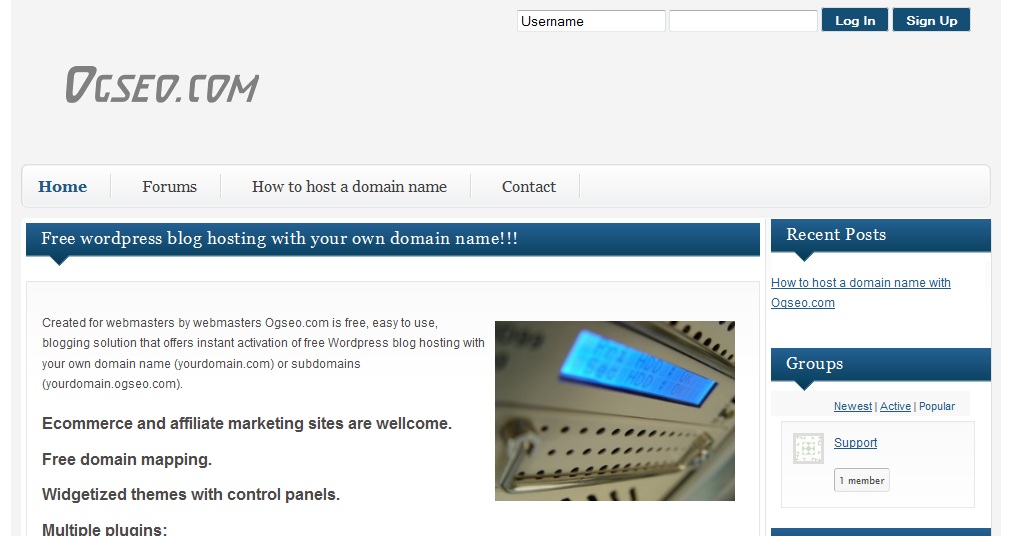
3.OGSeo.com

4. Blogr.com

Blogr

Check out this free blog hosting service Visit Blogr.com online

5. Xanga.com

Xanga

6. Blogster.com

Blogster

7. Multiply.com

Multiply

8. Blog.com

Blog

9. Freevlog.org

Freevlog

10. InsaneJournal.com

Insane Journal

11. ClearBlogs.com

Clear Blogs

12. Etribes.com

eTribes

13. Terapad.com

Terapad

14. Blogsome.com

Blogsome

15. ShoutPost.com

ShoutPost

16. OpenDiary.com

OpenDiary.com

17. Greasy.com

Greasy

18. Blogetery.com

Blogetery

19. Friendster.com

Friendster

20. Netcipia.com

Netcipia

Have a nice blogging. :)

How to write articles to boost sales 2

This item was filled under [ Affiliate Marketing, Marketing Tips and Tricks ]

If you’ve been checking out this series of articles, you’ve seen how important it is for any serious affiliate marketer to have good web content. Good content can mean the difference between someone clicking onto your site and clicking away a moment later and someone staying for a while and then clicking through to buy the affiliate marketing product or service you’re trying to sell. But what if you just aren’t a very good writer? What if your mind is programmed for business, not English. Don’t worry, there are options for you.

• Search the public domain. There are millions of articles that are currently in the public domain that you can use on your web site free of charge. A simple web search can bring up hundreds of these kinds of articles. And the best part is you can edit them, change them, alter them or do whatever you want to them so that they sound exactly like you want them to. You don’t have to worry about paying any authors or stepping on any toes. This is an excellent way to go if you don’t want to write content yourself.

• You can pay companies to write content for you, and in most cases, it’s cheaper than you think, having in mind what the affiliate marketing payment are. When you consider how important good web content is, paying someone a few dollars to write exactly what you need isn’t such a bad idea. Of course, some companies charge more than others and it always pays to shop around, but don’t shut yourself off to the idea of paying for content. Sometimes you have to spend money to make money and this is one of those cases if you don’t want to write your own web content.

• Maybe the best choice of the three is to simply read and learn. Spend a week or two clicking around on the Internet and reading the web content on other affiliate websites. Take as much of that content in and then try to write in a similar style about the product you’re trying to sell. You don’t instantly become the best writer in the world this way, but studies have shown that the more you read, the better writer you’ll be. Experience pays and the more you know about how to write in this style, the easier it will be.

Having solid web content can’t be overstated. You will never have a truly successful affiliate marketing website unless you have good content for your affiliate marketing sites. If you can’t write it yourself, you do have other options, but the best thing you can do is to learn how to write in this style. It will be an investment that will pay off time and time again.

Affiliate Marketing – Can You Make Money With It?

This item was filled under [ Affiliate Marketing ]

Affiliate marketing is a wide-spread strategy used in Internet marketing where a merchant or webmaster rewards affiliates for their marketing efforts which direct potential clients to the website where they view a sales page and if sufficiently impressed with the product they may make a purchase. Affiliate marketing, AM for short, is the act of selling a product for a commission and if it is done correctly the rewards can be huge and of course you can work from home.

This type of marketing has made a terrific impact on the Internet marketing scene, particularly on those companies which started in the early years of e-commerce. It is the most cost effective sort of marketing there is, and is indeed incredibly efficient.

It has now become normal practice for companies to include affiliates in their marketing plans, as it offers a very attractive online channel with complete precision and accountability.

Affiliate organizations are varied and include individuals, organizations and businesses, networks, management companies, third party vendors, and other affiliates that promote the products and services of their partners.

Affiliate marketing really is an excellent system. You never have to touch a product, carry stock, or arrange deliveries. And when the customer makes a purchase you get paid. Network marketing is an extension of AM and also involves selling a product for a commission, but in addition it focuses on bringing other resellers (or affiliate marketers, distributors or representatives) into the program as well.

AM is not difficult work, but the marketer does need to have a clear understanding of what she or he is aiming to achieve. It is definitely a good way to build a business that can potentially become a full time job. To be an affiliate of third party companies like Commission Junction or Clickbank costs you nothing. The affiliate’s objective is to sell or get leads for someone else’s service or product. Because this form of marketing is attractive many people are drawn in to the business and it has therefore become very competitive

As an affiliate you begin by placing ads for your chosen product on your Web site and/or in suitable advertising sites. When a user clicks on the ad, your visitor will go to the Web site where the product is described and they can learn of the potential benefits the product or service will provide for them. The affiliate marketer is performance driven because he or she is paid only when the merchant has achieved the predetermined goal This goal can be anything that a merchant has to get done, for example getting conversions (convincing the customer to buy his product), accumulating data, leads generation, getting feedback or anything at all. The whole idea of affiliate marketing is based on the “No cure no pay “-principle.

Generating extra income has become much easier although very competitive. Thousands of the more popular products are marketed on the internet every day using affiliate marketing strategies. Most companies and vendors make use of affiliates to sell their product or service, there-by greatly increasing their turnover and at the same time the affiliate is able to earn money.

Building a Money-Making Brand

There’s a lot of buzz these days about having a “brand platform. ” Perhaps you’ve heard the term, but aren’t sure what it means. Rest assured–you’re not the only one! Even within the advertising industry you’ll find disagreement over its definition. What one guru
calls a “brand platform” another calls a “corporate image.” Don’t be confused. Regardless of what you call it, you need it. A brand
platform serves as the springboard for all branding decisions.

Simply put, your brand platform is what your brand stands for. It’s a strategic statement or set of statements that encompass who your company is, what it does, how it plans to succeed, and why it’s unique or different. Although brand platforms vary from
business to business, most consist of the following basic elements:

Mission
Identity Attributes
Value Proposition
Tagline and/or Byline
Brand Story

Creating Your Brand Platform

Now that you know the five basic elements every brand platform should have, it’s time to put them in writing. Here’s how to begin.

1. Mission. Your mission statement should express your brand’s purpose and driving philosophy in a clear, succinct and compelling way. To construct your mission statement, you must identify your brand’s features and benefits, target market and competitive advantages as they stand today. You must also decided on a long-term goal for your brand. Mission statements come in all shapes and sizes. Some are specific, others leave room for interpretation. Your mission statement should be fairly brief–no more than five sentences.

For example: “Our mission at XYZ Company is to be the premier mass market provider of XYZ product on the East Coast. We will do this by selling affordably priced equipment through our network of distributorships. We will be known as a company that builds lasting relationships with our customers, suppliers and employees.”

2. Identity Attributes. List words or phrases that describe your brand at its core–words you want customers to associate with your brand in lieu of other brands. This list should make your brand stand out and resonate with the desires of your target market.
Keep in mind, however, that consumers can’t and won’t associate your full list with your brand. That’s why at some point you should highlight one of these words–just one–that you want customers to most connect with your brand. You want to “own” this word in the mind of your customer.

For example: What word pops into your head when you think of Volvo automobiles? Most likely, you think “safety.” And when you think of FedEx? “Overnight. ” In everything you do, strive to convey or exemplify that one word.

3. Value Proposition. Ask yourself: How is my brand better than the others? Where does my brand create value for consumers? What’s my brand’s competitive advantage? Your value proposition should differentiate you from your competition and sum up
the unique benefits consumers get from choosing your brand. Distill your brand’s value into a sentence or two, and try to include key features and benefits.

Example: “The high-quality material used to build XYZ product provides its corporate consumers with peace of mind so they can focus on their core business.”

4. Tagline and/or Byline. I say “and/or” here because you really don’t need both a tagline and a byline–whatever you choose usually appears near your logo where there’s only room for one statement. A byline is a descriptor or clarifier, like “Home Electronics,” while a tagline is more sophisticated. A tagline is a slogan, company statement or vision that condenses the brand essence in a way that creates interest. It should be short, pithy and smart.

(Note: Taglines, slogans and positioning statements are often used interchangeably.)

Examples of current taglines are: Apple: Think different. and Target: Pay less.

5. Brand Story. Record and preserve the history of your organization in a concise and compelling way. Was there anything unusual or interesting about how your company came into being? Think through public relations angles. The media loves a good story!
Your history can also make a wonderful addition to your website, where it can increase the comfort factor with consumers and help overcome the impersonal nature of online commerce.

Above all, remember that brands are created in the mind and heart of your consumer. Strive to embed an emotional tie in your brand platform. The fact is customers buy the brand they feel comfortable with–and that’s not always the brand with the most
features or benefits.

Tagged with: [ ]

To SEO or To PPC?

This item was filled under [ PPC, SEO ]

The online community is definitely a large market place that you cannot ignore, especially if you have an internet business. There are thousands if not millions of consumers that you can tap in the internet.

At the same time, the internet also poses a quite different challenge. The easy access that internet provides also gives you as much competition as you can imagine. It is too crowded and congested. Even the internet affiliate marketing is a field, where you can find a millions of webmasters, running their affiliate sites.

Having a website is not enough to make your business running and able to compete. You must take other alternatives to give way for the online community to access your website at any rate or chance possible.

You have to expose your website. Make it known. It has to be visible. It has to be frequently targeted by consumers and surfers.

Invest in marketing your internet site. There are basically two options available to you, the SEO and PPC. These two are probably the most desirable alternatives you can get for your internet business as strategy for search engine marketing as well as internet affiliate marketing.

1. SEO

SEO stands for Search Engine Optimization. Some researches indicate that 60% – 70% of internet surfers and users actually resort to using the Google search engine to find and locate web sites and pages, for any topic they desire. SEO is the process taken to make sure that the internet uses will find your website when ranked among the top results of a search. This way you can make sure that you will be visible and can clearly stand out from the rest.

To get a search engine optimization, you will have to build on your own internet site frequently hit internet links to web site pages. The process will involve IBLN or Independent Back-Linking Network, wherein hundreds or even thousands of pages will be utilized to promote a particular website of a client.

In SEO, there is no need for you to pay for the clicks although it will require you to spend time doing research to get a favorable combination of ads and target audience. The SEO process is a long term one. It requires months, 6 months at the least, before the proper outcome is fully achieved, but once the goal is accomplished, you will definitely get a steady source of profit.

2. PPC

PPC means Pay Per Click. It gives way advertising on a search engine. These are sponsored listings that you see whenever you make a search. There will be a charge whenever a visitor or web surfer clicks on any of your ads. There will first be a bidding process. The highest bidder for the price per click will definitely get the chance to be first listed in the search engine.

With this kind of advertising, you can still basically control your campaign as you get to create your own ad. You will also manage the target audience and still stay within the bounds of your budget. Most of the providers of PPC advertising will allow you to specify the target market, either by topic, industry or geographical location. You can also very well check if your ad gets to be shown at all and if it is competitive with the rest.

There are some guaranteed benefits when you get to maximize the PPC strategy.

* PPC lets you advertise to the whole of the online community. It is also relatively easy to set up.

* At first glance, PPC advertising may seem very expensive. Could it possibly happen that someone out there will go on clicking on your ad? This will definitely give you a large bill without the expected profit on your part. If this provides a lot of worries, be rest assured that there is a protection for you. Networks are able to recognize fraudulent clicks.

* You can also set a budget for a certain period. The moment your budget has been used up by the target number of clicks, your ads will no longer be displayed until the next period you want it again displayed.

* You will also be able to adjust well to changes in market demands and trends.

In deciding which of the two strategies will work right for you, think of your goals and of your resources. They definitely offer benefits and advantages that will work for your good. The better way to approach this two is to evaluate according to your short term and long term plans. Take the PPC course for your short term goals and choose SEO if you have long term ones.

There world is out there for you now. Just make sure you do what will work best for your entrepreneurial endeavors and visions. The secret to success lies in your hands. Just study your options well and you’ll get exactly what you want.

Internet Marketing Success

This item was filled under [ Affiliate Marketing ]

Internet marketing success could be defined differently for each and every person online, although I think that there are some very specific guidelines by which we can measure internet marketing success.

I think that internet marketing success has a lot to do with the original intent of each individual marketer. When you get online and decide you want to do something online, then that is your personal measure of success in your life, at least as it pertains to internet marketing success.

When you get started online, you might be thinking that internet marketing success is to make an extra $100 per month. Or maybe you think that internet marketing success is just getting a web site live and online – and that is a perfectly good measure of success online!

For me, online marketing success is that I can work 100% from the freedom of my own home – and with wireless internet, I can literally work anywhere my laptop gets a wireless signal. For me, that is success.

So you have to define for yourself what is your definition of success online. Is internet marketing success to have a web site live, or is it to have some set number of pages online. Or is internet success to you some amount of income? Or maybe internet marketing success is some combination of all of these. Maybe for you it is the freedom of working for yourself, but also incorporates a measure of income also.

What is internet marketing success to you?

Do you want to learn more about how I do it? I have just completed my brand new guide to article marketing success, ‘Your Article Writing and Promotion Guide’

15 Tips to Increase Blog Traffic

This item was filled under [ Blogging ]

1. Write Well and Write Often

Frequently updating your blog with useful content is the first step to building your blog’s audience. The content you write is what will keep readers coming back for more. Make sure you have something meaningful to say to them and say it often to maintain their interest and keep them loyal.

Furthermore, post frequently to increase the number of chances you have for your blog’s content to be noticed by search engines such as Google or Technorati.
Sponsored Links

Network Traffic MonitorGet a Free WAN Evaluation. Identify 600+ WAN Apps, Find & Fix Problems.Packeteer.com

BlogFree blog to share your travels Travel blogs, photos, maps, videoswww.TravelPod.com

Software Marketing ToolsArticle, Affiliate, Blogging, Email Get The Marketing Tools You Needkmemarketing.com

2. Submit Your Blog to Search Engines !!! – not necessary

Get on the radar screen for the popular search engines such as Google and Yahoo! by submitting your blog’s URL to them. Most search engines provide a ‘Submit’ link (or something similar) to notify the search engine of your new blog, so those search engines will crawl it and include your pages in their results.

It’s important to understand that simply submitting your blog to search engines doesn’t mean your pages will appear at the top of a Google search results screen, but at least your blog will be included and will have the chance of being picked up by a search engine.

3. Use and Update Your Blogroll

By adding links to sites you like in your blogroll, the owners of those blogs will find your blog and will be likely to add a reciprocal link in their blogrolls. It’s an easy way to get the link to your blog in front of many readers on other blogs. The hope is that some of those readers will click on the link to your blog on the other blogs’ blogrolls and find your content interesting and enjoyable turning them into loyal readers.

4. Harness the Power of Comments

Commenting is a simple and essential tool to increase your blog’s traffic. First, respond to comments left on your blog to show your readers that you value their opinions and draw them into a two-way conversation. This will increase reader loyalty.

Second, leave comments on other blogs to drive new traffic. Make sure you leave your blog’s URL in your comment, so you create a link back to your own blog. Many people will read the comments left on a blog post. If they read a particularly interesting comment, they are highly likely to click on the link to visit the commentor’s website. It’s important to make sure you leave meaningful comments that are likely to invite people to click on your link to read more.

5. Syndicate Your Blog’s Content with an RSS Feed

Setting up an RSS feed button on your blog makes it easy for your loyal readers to not just read your blog but also know when you publish new content.

6. Use Links and Trackbacks

Links are one of the most powerful parts of your blog. Not only are links noticed by search engines, but they also act as a tap on the shoulder to other bloggers who can easily identify who is linking to their sites. Linking helps to get you noticed by other bloggers who are likely to investigate the sites that are linking to them. This may lead them to become new readers of your blog or to add links to your blog from theirs.

You can take links to other blogs a step further by leaving a trackback on the other blog to let them know you’ve linked to them. Blogs that allow trackbacks will include a link back to your blog in the comments section of the post that you originally linked to. People do click on trackback links!

7. Tag Your Posts

It takes a few extra seconds to add tags to each of your blog posts, but it’s worth the time in terms of the additional traffic tags can drive to your blog. Tags (like links) are easily noticed by search engines. They’re also key to helping readers find your blog when they perform searches on popular blog search engines such as Technorati.

8. Submit Your Posts to Social Bookmarking Sites

Taking the time to submit your best posts to social bookmarking sites such as Digg, StumbleUpon, Reddit and more can be a simple way to quickly boost traffic to your blog.

9. Remember Search Engine Optimization

When you write your blog posts and pages, remember to optimize your pages for search engines to find them. Include relevant keywords and links but don’t overload your posts with too many relevant keywords or completely irrelevant keywords. Doing so can be considered spamming and could have negative results such as your blog being removed from Google’s search entirely.

10. Don’t Forget Images

Images don’t just make your blog look pretty, they also help people find you in search engine listings. People often use the image search options offered by Google, Yahoo! and other search engines, and naming your images with search engine optimization in mind can easily boost your traffic.

11. Consider Guest Blogging

Guest blogging can be done when you write a guest post on another blogger’s blog or when another blogger writes a guest post on your blog. Both methods are likely to increase traffic as your blog will be exposed to the other blogger’s audience. Many of the other blogger’s readers will visit your blog to see what you have to say.
Sponsored Links

Calling All BloggersGet paid to give away free tech magazines, software & white papers.

Traction SoftwareSimple, scalable, secure Blog and wiki software for businesswww.TractionSoftware.com

BlogFree blog to share your travels Travel blogs, photos, maps, videoswww.TravelPod.com

12. Join Forums, Web Rings or Online Groups

Find online forums, web rings, groups or social networking sites such as Facebook and LinkedIn where you can share ideas and ask questions of like-minded individuals. Add a link to your blog in your signature line or profile, so each time you post on a forum or participate in another online network, you’re indirectly promoting your blog. Chances are many people will click on that link to learn more about you.

13. Promote Outside Your Blog

Promoting your blog shouldn’t stop when you step outside the blogosphere. Add your blog’s URL to your email signature and business cards. Talk about it in offline conversations. It’s important to get your name and your blog’s URL noticed offline, too.

14. Nominate Yourself and Other Blogs for Blog Awards

There are a number of blog awards given out throughout the year. Nominating yourself and other blogs and bloggers can draw attention to your blog and drive traffic to it.

15. Don’t Be Shy

The most important part of the blogosphere is its community and much of your success as a blogger will be tied to your willingness to network with that community. Don’t be afraid to ask questions, join conversations or just say hi and introduce yourself. Don’t sit back and hope the online world will find you. Speak out and get yourself noticed. Let the blogosphere know you’ve arrived and have something to say!


Tagged with: [ , ]

10 Awesome Ways To Attract More Orders

This item was filled under [ Marketing Tips and Tricks ]

1. Create a free ebook directory on a specific topic at your web site. People will visit your web site to read the free ebooks and may see your product ad.

2. Turn part of your web site into a members only web site. Instead of charging for access, use it as a free bonus for one of your products.

3. Add a free classified ad section to your web site. You could then trade banner ads with other web sites that have free classified ad sections.

4. Create two versions of your e-zine so people can choose if they want ads included with it or not. This’ll attract the people who hate ads to subscribe.

5. Publish your e-zine only on your web site. Have people subscribe to a “new issue” e-mail reminder. This could really increase your traffic and sales.

6. Sell advertising space in your product package. You could sell inserts, flyers, brochures, booklets, and digital ads for electronic products.

7. Offer daily or weekly visitor bonuses. This will increase your repeat traffic and sales because your visitors will visit regularly to get the visitor bonuses.

8. Allow people to download software or e-books from your web site at no cost. Just ask your visitors in return if they’ll refer their friends to your web site.

9. Build up the number of people that join your free affiliate program quickly by temporally offering your product for free to the people that sign up.

10. Negotiate with e-zine publishers to get free or discounted ads by letting them join your affiliate program and earn commissions on the ad you run.


Next Page »